Coming Soon: A glimpse into our participation at MAGNA 2026 in Santa Fe, New Mexico. Stay tuned for conference highlights and photos!
Quantum Research in the Spotlight: Hill Group Postdoc Kavipriya Wins Second Place
🏆 Congratulations to Hill Group Postdoctoral Researcher Dr. Kavipriya Thangavel on winning Second Place in the Five-Minute Research Competition, held as part of National Postdoc Appreciation Week 2026 at Florida State University!
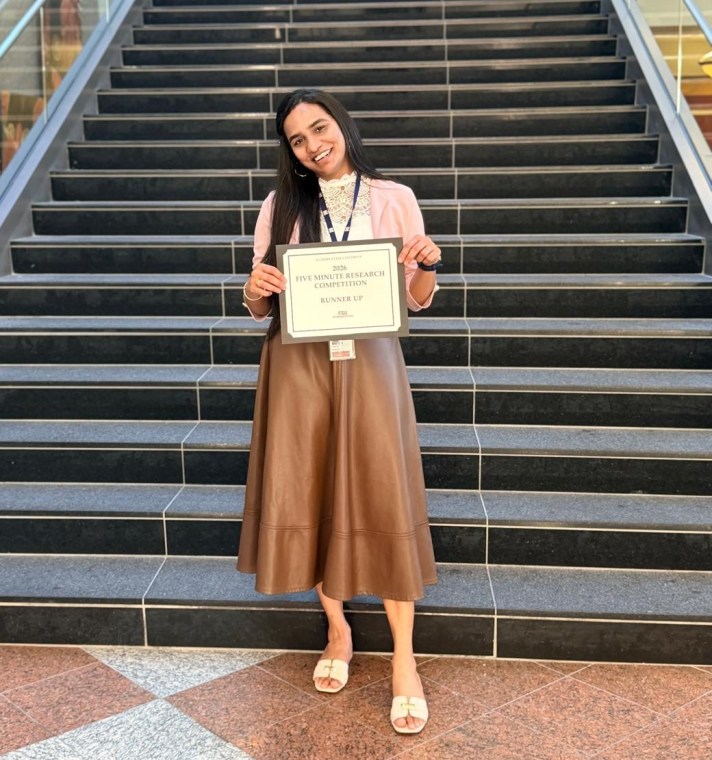
The competition challenges postdoctoral researchers to present their research in just five minutes, making complex scientific concepts accessible and engaging to a general audience, including members of the public and the broader FSU community.
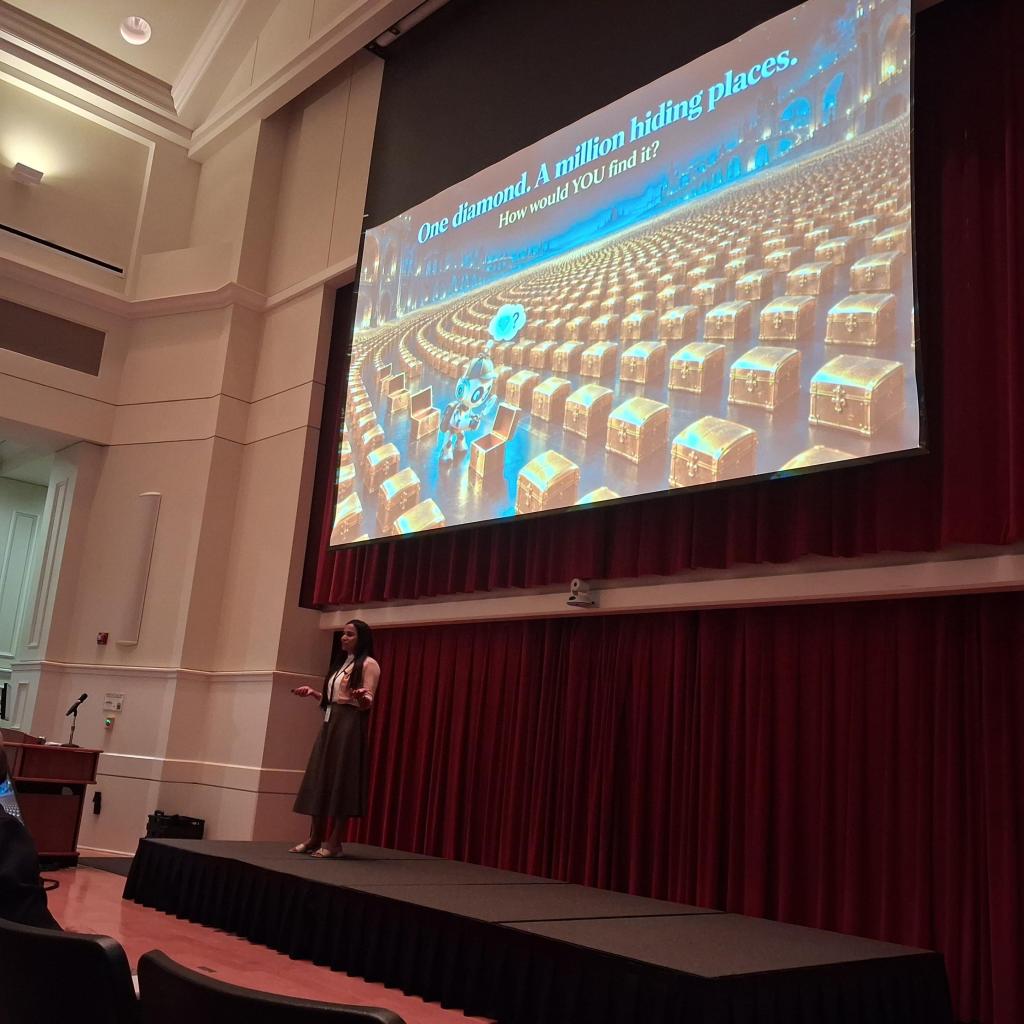
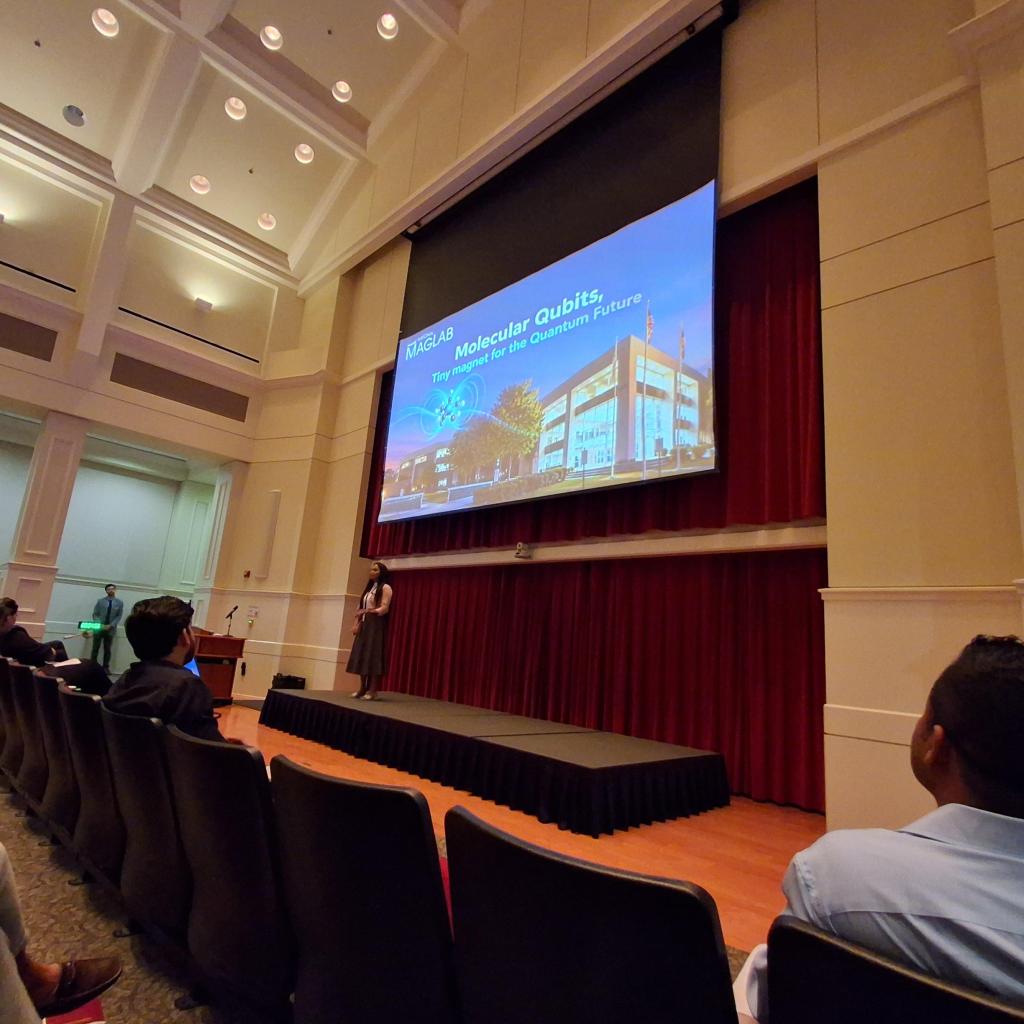
Her presentation, “Molecular Qubits: Tiny Magnets for the Quantum Future,” highlighted the potential of molecular magnets in advancing quantum technologies while bringing the fascinating world of quantum science to a broader audience.
Congratulations on this achievement! 🎉
Steve Hill Delivers Invited Talk and Kavi Thangavel Presents Research at the 65th Rocky Mountain Conference
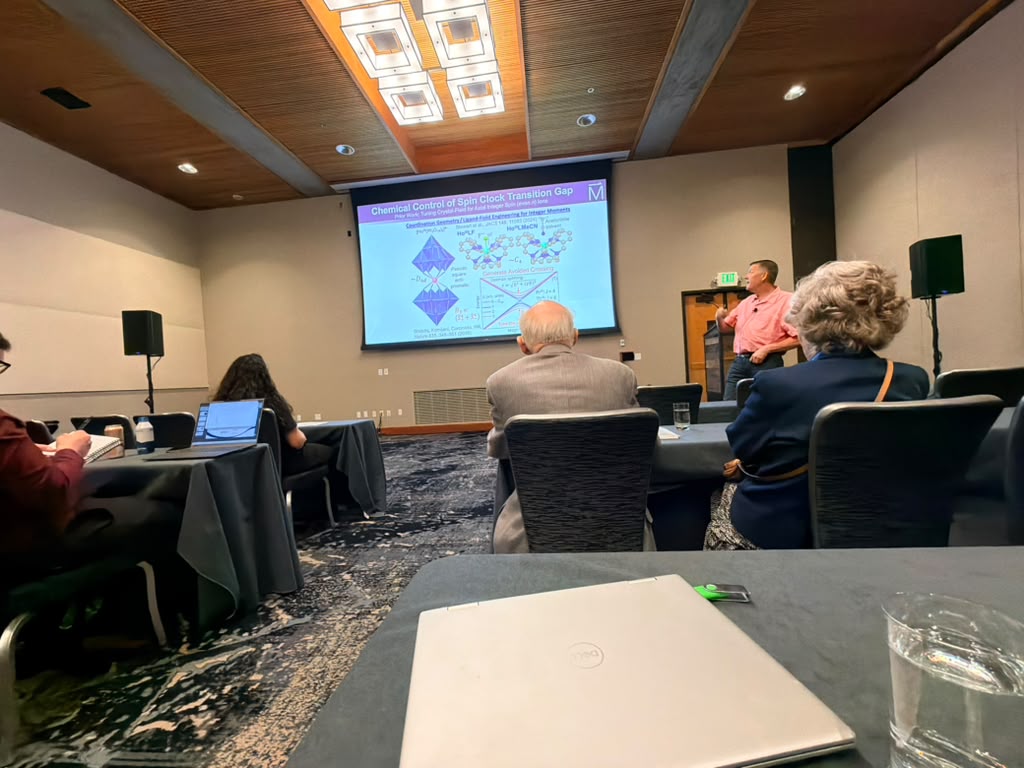
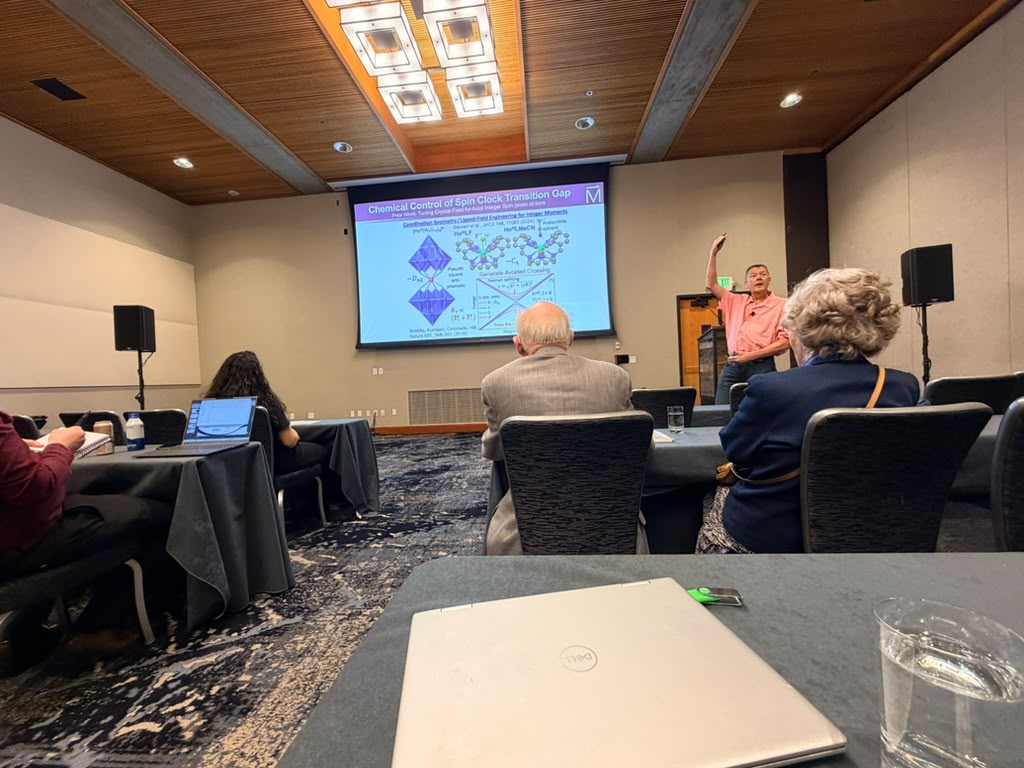
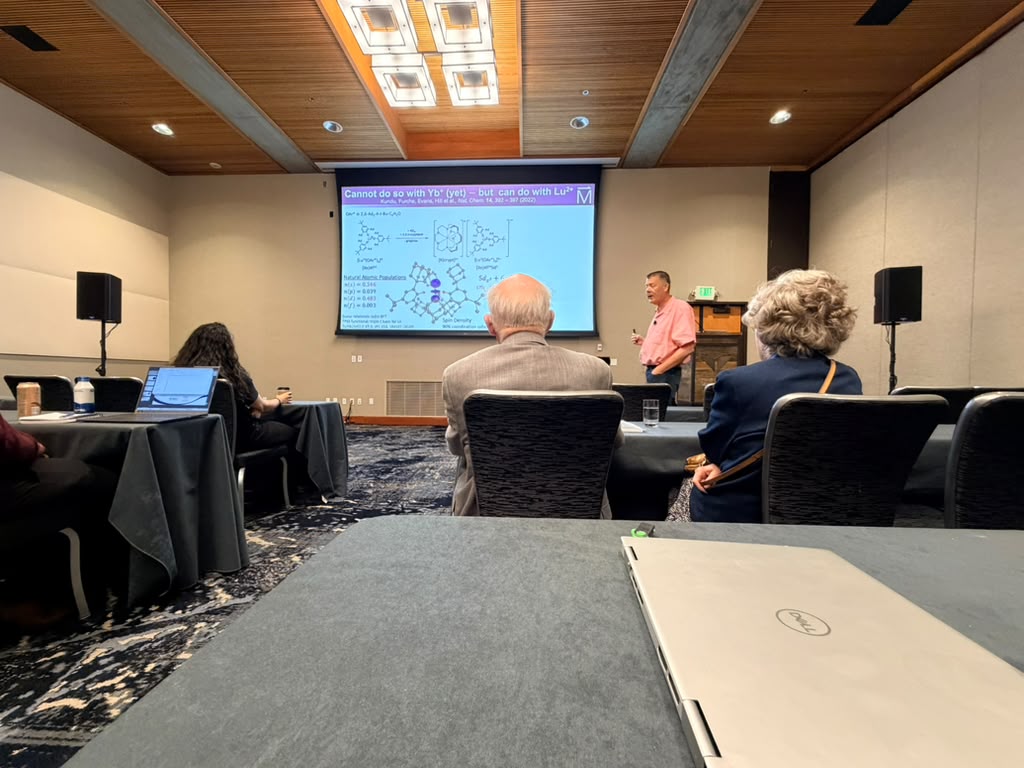
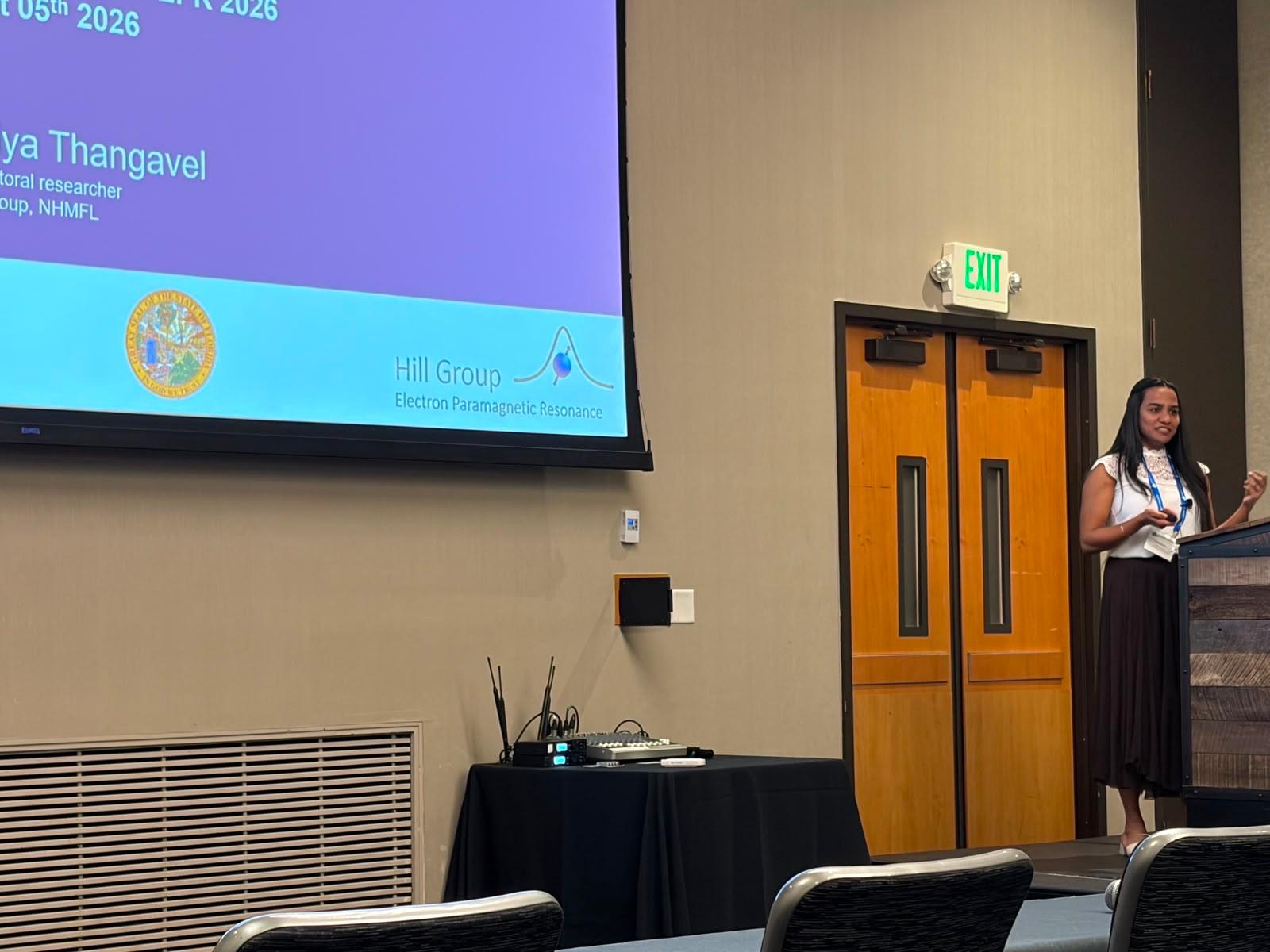
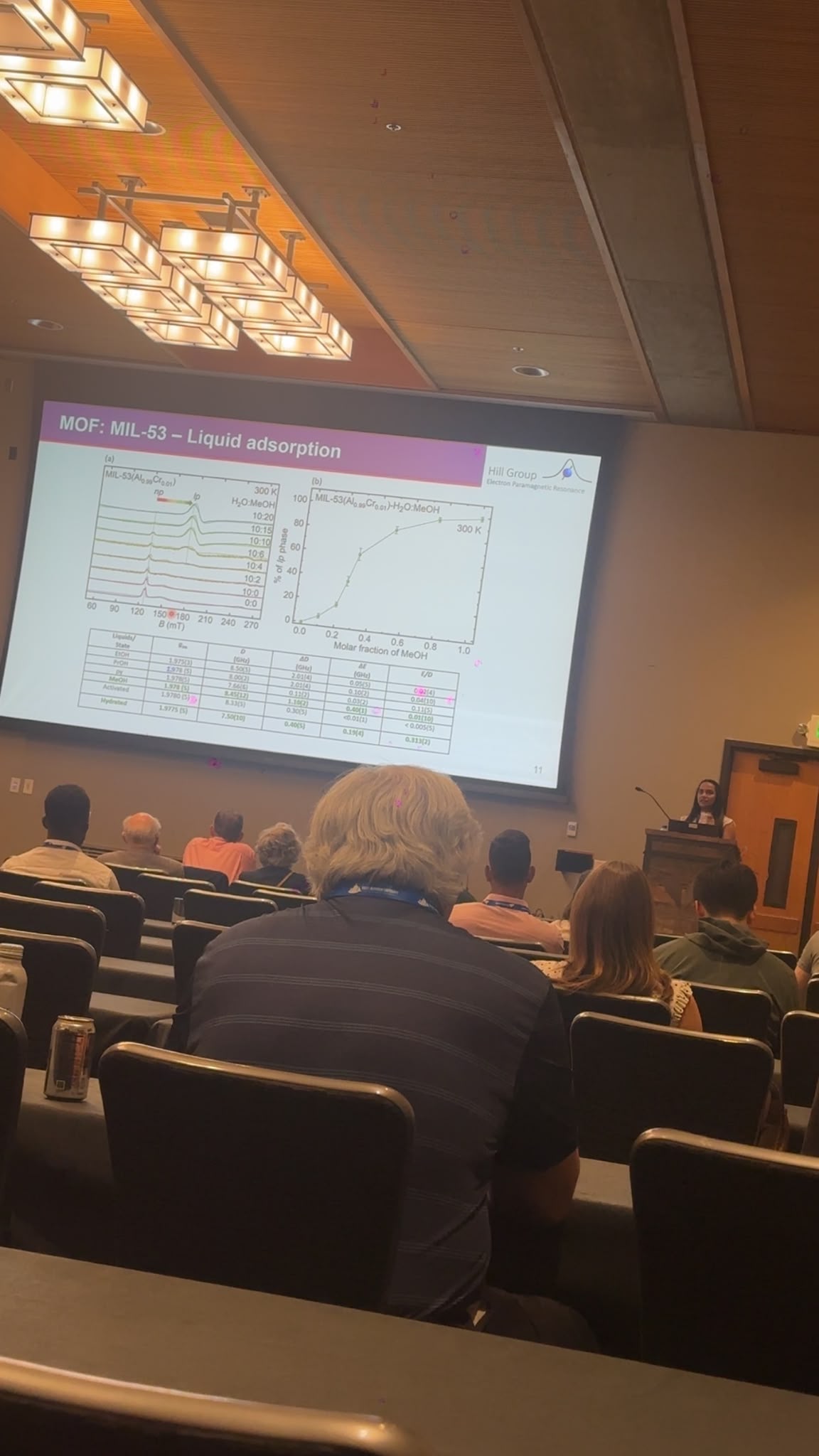
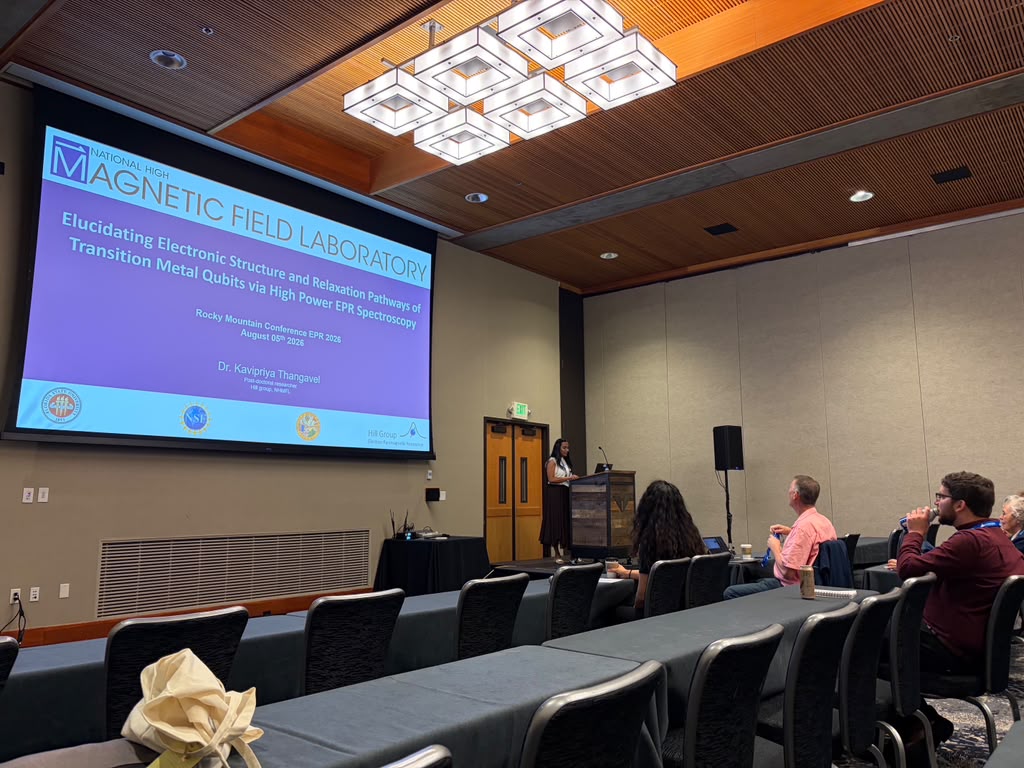
Prof. Steve Hill and Dr. Kavipriya Thangavel represented the EMR Group at the 65th Rocky Mountain Conference on Magnetic Resonance (RMC), held August 2–6, 2026, in Snowbird, Utah.
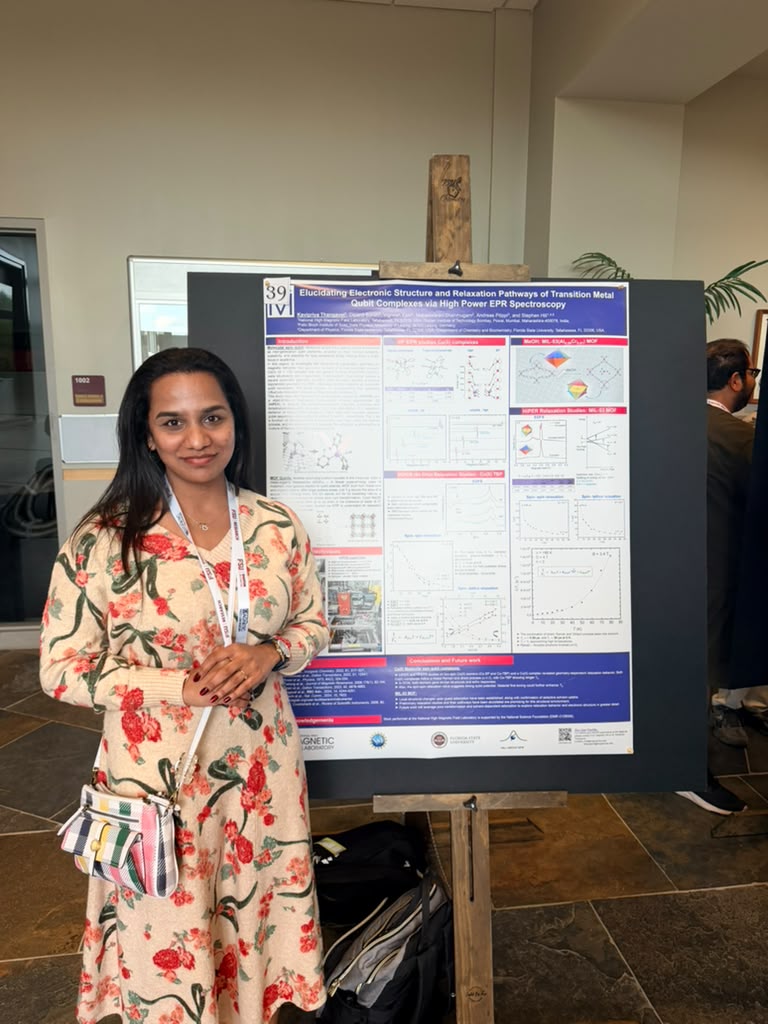
As part of the 47th International EPR Symposium, Prof. Hill delivered an invited talk, titled “Molecular Hyperfine Qubits Based on Heavy Elements,” highlighting the group’s research on molecular spin qubits. Kavi contributed both an oral presentation and a poster, titled “Elucidating Electronic Structure and Relaxation Pathways of Transition Metal Qubits via High Power EPR Spectroscopy,” showcasing her research on the electronic structure and spin-relaxation dynamics of transition-metal-based molecular quantum materials using advanced high-field/high-power EPR spectroscopy.
Their participation highlighted the EMR Group’s ongoing efforts in molecular quantum science and advanced EPR spectroscopy, while providing an opportunity to share recent results and engage with the international magnetic resonance community.
REU Student Brittany Alvarado Completes Her Research Project with Postdoc Kavi in the Hill Group
Congratulations to Brittany Alvarado, an REU student who successfully completed her summer research project with the Hill Group under the mentorship of postdoc Kavi. As part of Kavi’s research project on molecular quantum materials, Brittany participated in high-field EPR (HFEPR) experiments and gained hands-on experience with EPR spectral simulations and the interpretation of spin Hamiltonian parameters.
Her research focused on Co(II)- and Gd(III)-based metal–organic framework (MOF) materials, providing valuable experience in understanding the electronic and magnetic properties of molecular spin systems. Brittany presented the results of her work at the MagLab REU Final Presentations.
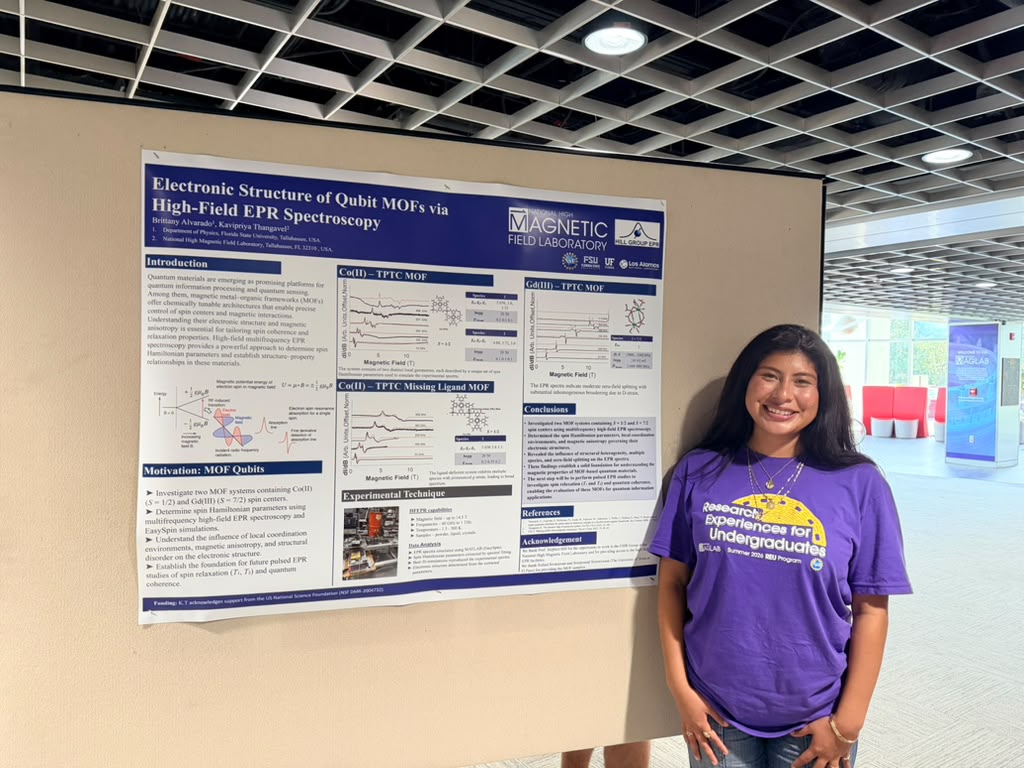
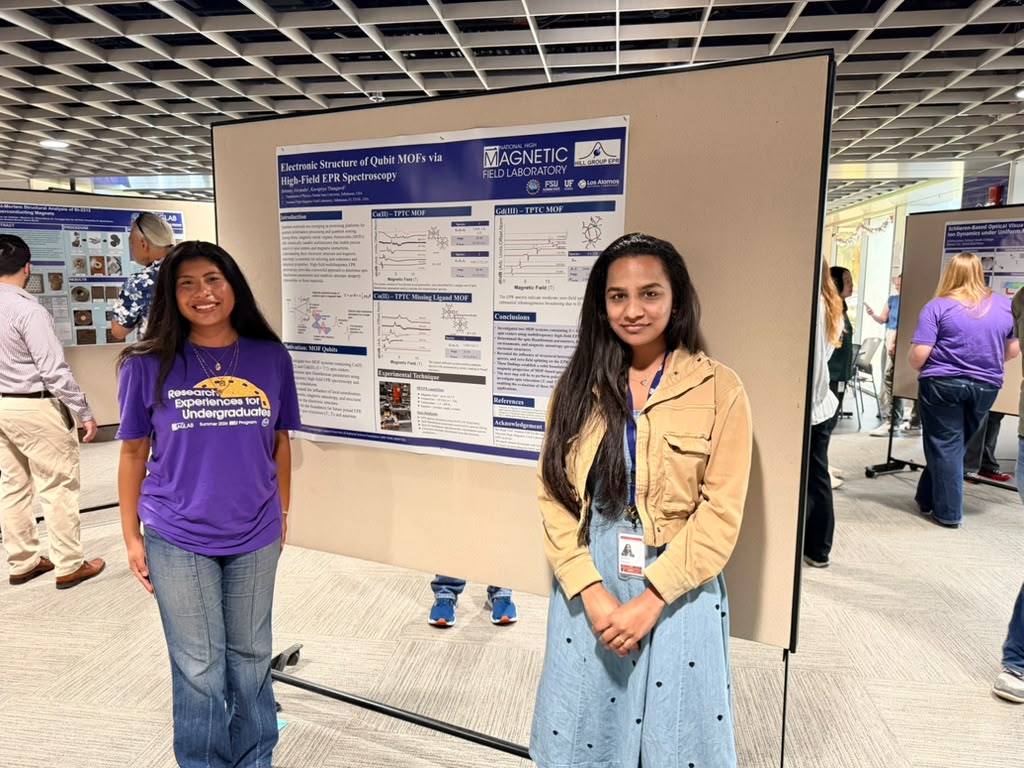
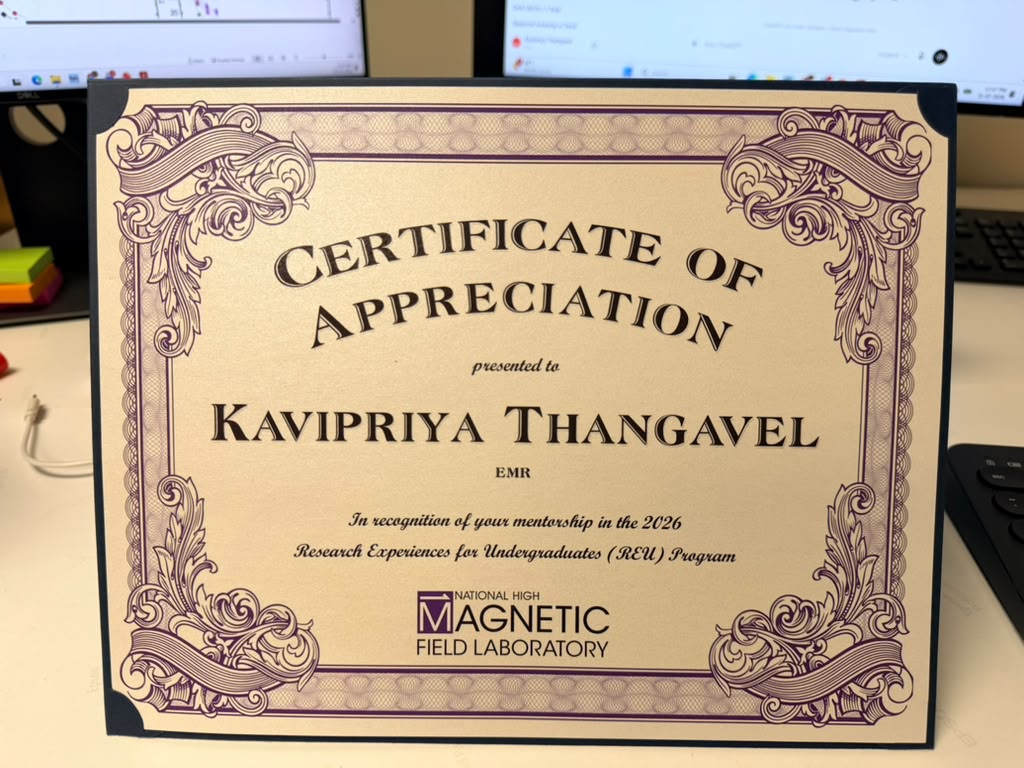
Congratulations, Brittany, on successfully completing your project and final presentation!
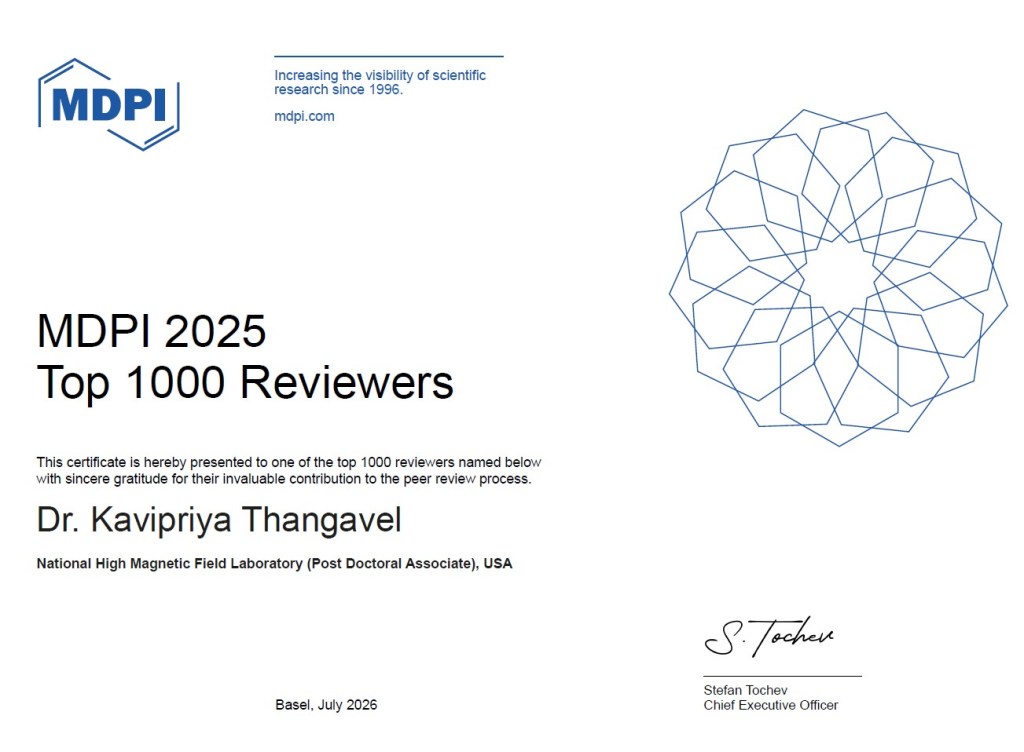
Kavi Recognized Among MDPI’s Top 1000 Reviewers for 2025
We are delighted to share that our postdoctoral associate, Dr. Kavipriya Thangavel, has been recognized as one of the MDPI Top 1000 Reviewers for 2025 for her contributions to the scientific peer-review process. This recognition acknowledges her dedicated service to the scientific community and her efforts in supporting the quality and integrity of scholarly research through peer review.
Team EMR at the Florida Quantum Conference 2026
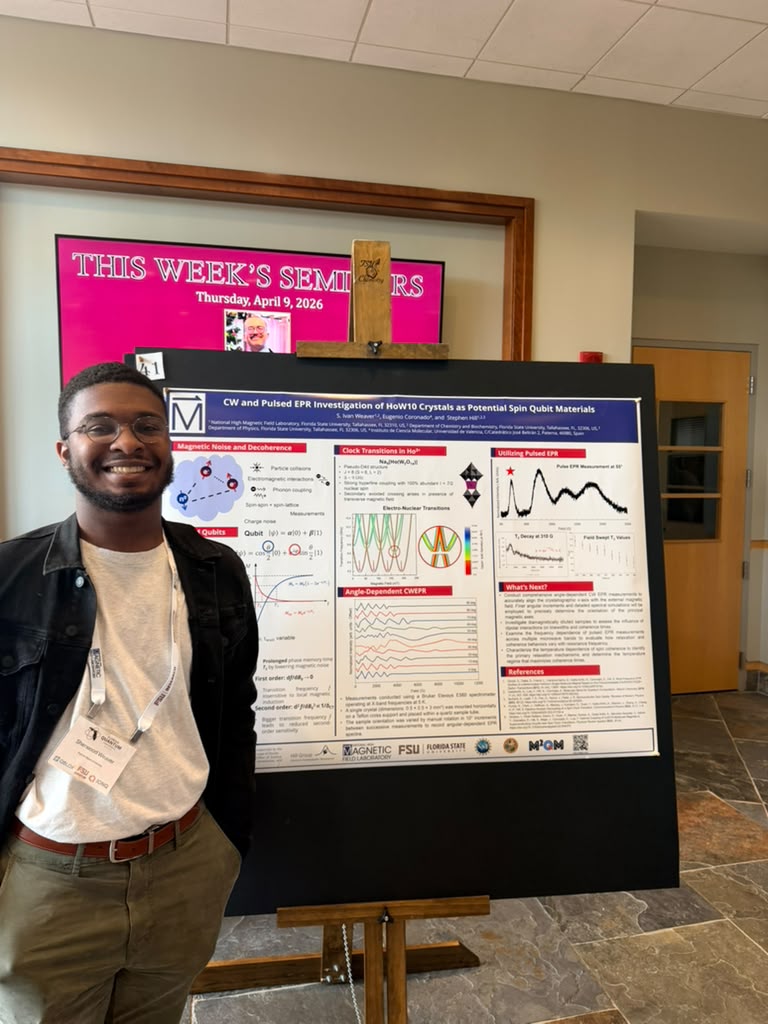
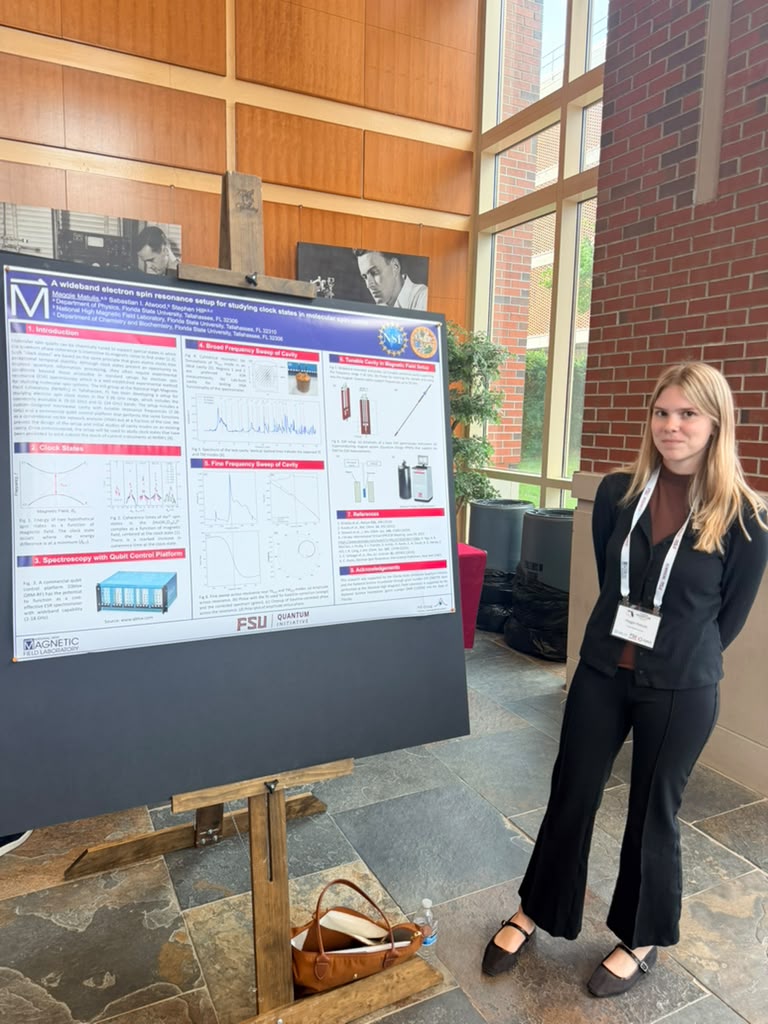
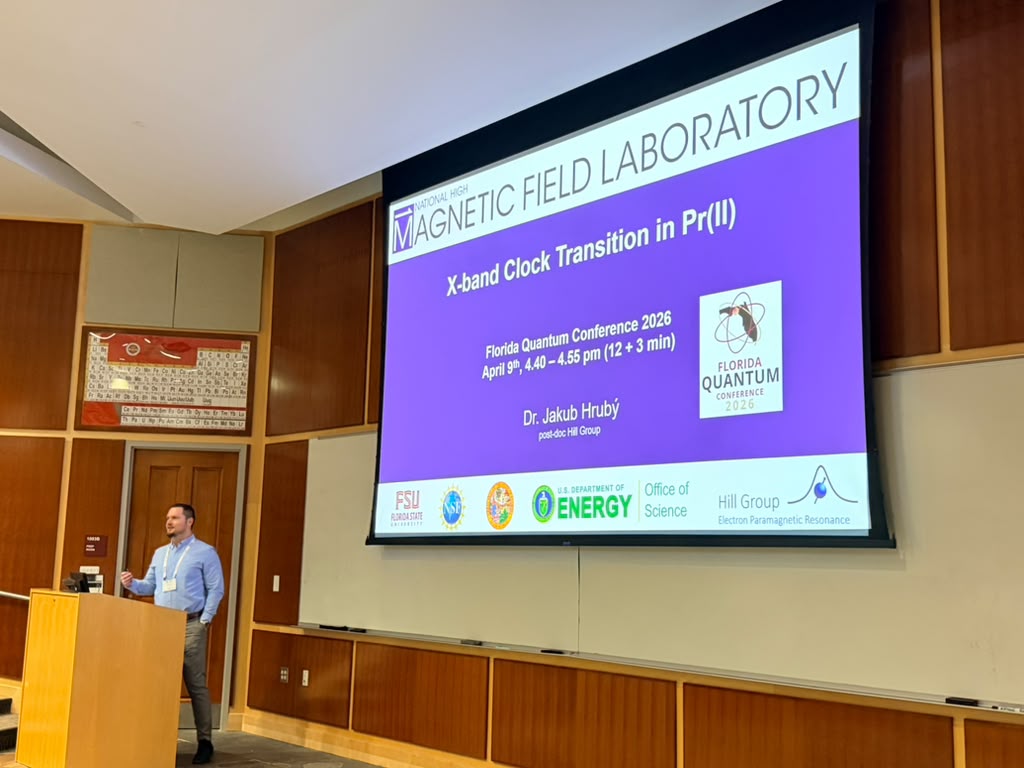
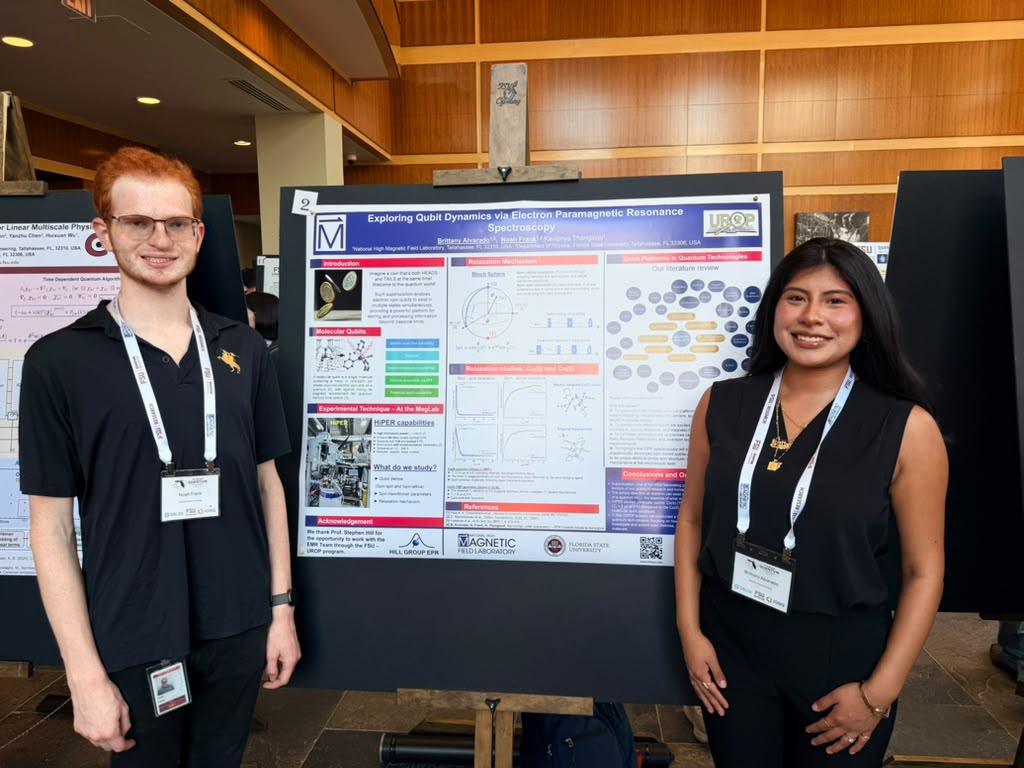
Team EMR participated in the Florida Quantum Conference, held April 9–11, 2026, at Florida State University. Members of the group contributed oral and poster presentations highlighting our research on molecular quantum materials, including the use of advanced EPR spectroscopy to understand their electronic structure, spin dynamics, and quantum coherence. The conference provided an excellent opportunity to share our recent results, exchange ideas with the broader quantum science community, and explore new directions in quantum materials research
Welcome to the Hill EPR Group, Samraggi!

Samraggi received her Bachelor of Science in Physics from Gokhale Memorial Girls’ College, affiliated with the University of Calcutta, Kolkata, India, and her Master of Science in Physics from the National Institute of Technology Silchar (NITS), Assam, India. At NITS, she completed her master’s thesis under the guidance of Dr. Saumya R. Mohapatra, where she investigated resistive switching phenomena, synthesized MXene, fabricated electronic devices, and explored the potential of MXene for non-volatile memory applications, particularly resistive random-access memory (ReRAM).
Outside the laboratory, Samraggi enjoys photography. She also happens to have a twin sister who is pursuing a Ph.D. at Florida State University. Samraggi is currently pursuing her Ph.D. in Physics at Florida State University and is excited to be a member of the Hill Group.
UROP Students Complete Research Projects in the Hill Group
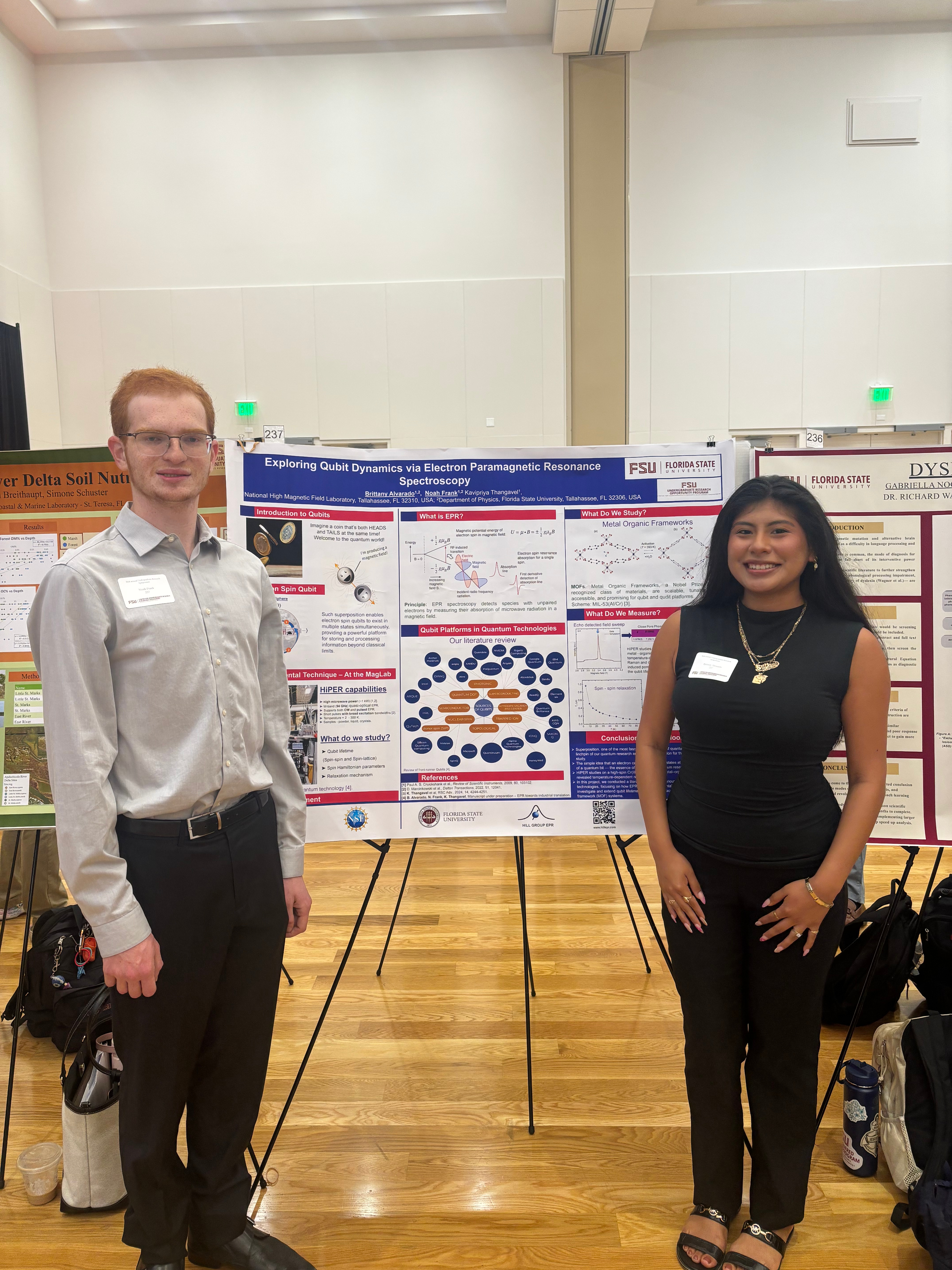
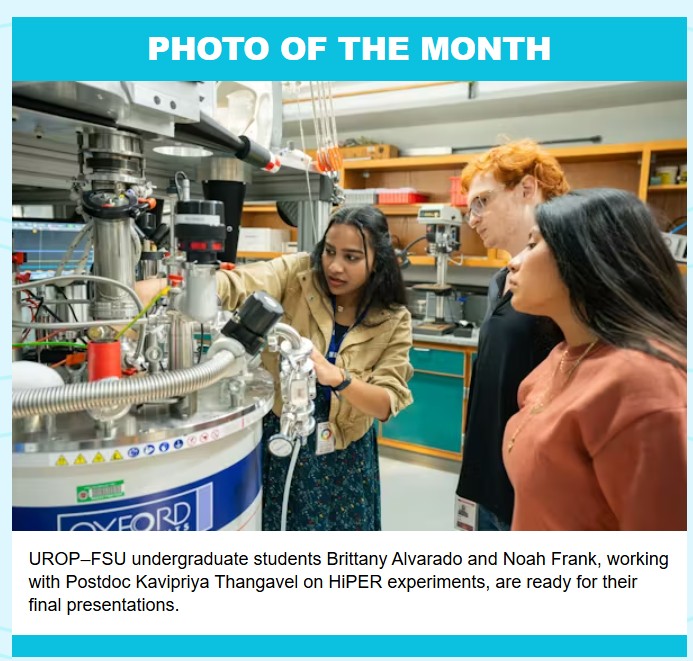
UROP students Brittany Alvarado and Noah Frank, working with postdoctoral researcher Kavipriya Thangavel in the Hill Group, have successfully completed their research projects. During the program, they carried out literature reviews, data analysis, and gained hands-on experience with HiPER experiments. They were also introduced to key concepts in quantum materials, spin relaxation, and scientific research through seminars and outreach activities. As part of the program, they also presented their work during the final UROP poster presentation conducted by Florida State University. Congratulations to them on completing the program!
Maggie Martilus Joins the Hill Group as an Undergraduate Researcher
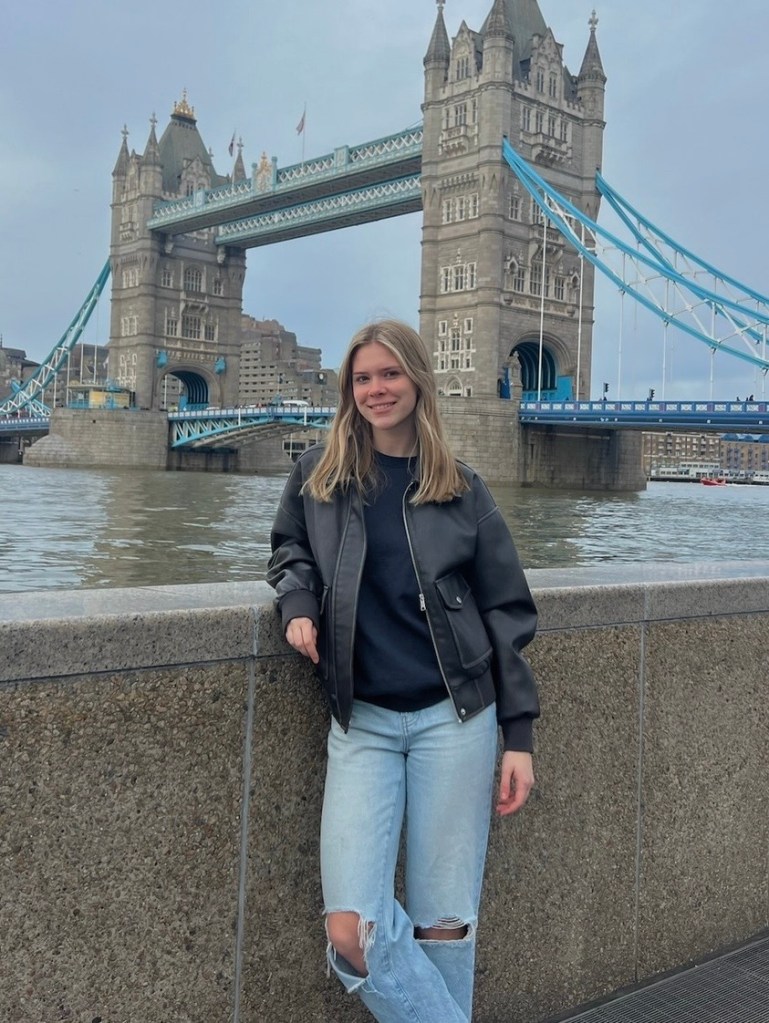
Maggie Matulis is a third-year Honors Physical Science major at Florida State University, with a minor in Business Analytics. Her physics coursework sparked her interest in research, leading her to join the Hill Group at the MagLab. In the spring semester, she began working with Dr. Sabastian Atwood, where she is learning to use a commercial qubit control platform (Qblox) as a spectrometer to be used for wideband electron spin resonance (ESR) experiments. Through this work, she has gained hands-on experience in coding and spectroscopy measurements. She looks forward to applying these skills to future ESR experiments in the coming months. Outside of the lab, she enjoys traveling and being involved in campus organizations.
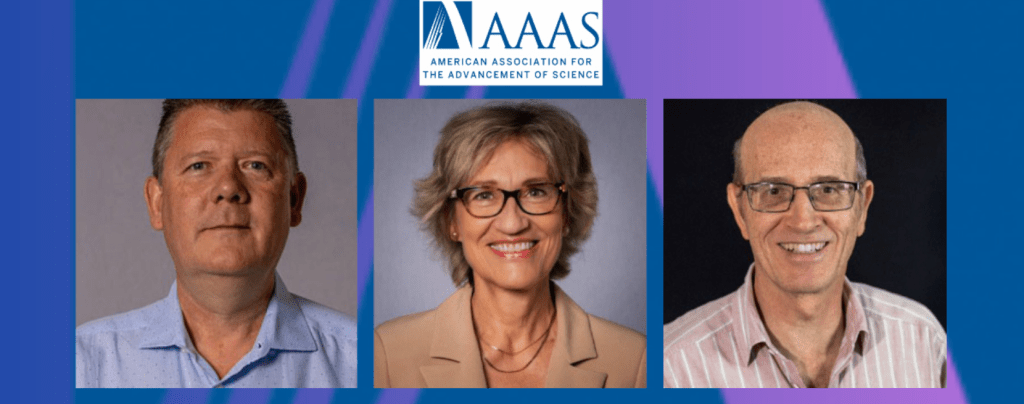
Congratulations to Steve on being named an AAAS Fellow.
Steve is a Fellow of the American Physical Society and was recently selected to serve on a National Academies of Sciences, Engineering, and Medicine committee focused on identifying opportunities at the interface of chemistry and quantum information science. READ MORE. Congratulations, Steve.
Also, more details in the MagLab Newsletter.